

neural.coder 0x24 — Success!
Geoff writes his code one final time, this time by himself. Or does he?

They had been on the road now for close to four hours. Pete had said he wasn’t rushing, he was trying to give Geoff as much time as possible, but was conscious that they were racing to beat the Archivists.
Geoff had nearly finished the library, there were just a few bugs to iron out. He could barely believe he’d managed it, but all he’d really had to do was apply himself for long enough and reproduce the code he had already written more than once. The only problem he couldn’t overcome was a bug in the search and location module, the purpose of which was to locate objects based on large concentration of a particular material. He’d been trying to debug the issue for a very frustrating hour. He was unable to find where he’d gone wrong.
What was he getting wrong? If he couldn’t fix this, he wasn’t any better than the Obligatto archivists who’d made such a mess at the service station. While considering their teleportation issues, he realised where he’d gone wrong himself, possibly where they had gone wrong too. He was in a moving vehicle, getting the coordinate routines to work required he took that into account, which he had done. What he had failed to consider was the movement of the earth!
Coordinates would move depending on what was used for a reference. He’d been using the location of the quantum chip in his phone as a fixed centre for his coordinate system. The problem was that the earth was always spinning, at the same time as moving around the sun, and the sun was moving even faster around the galaxy. He’d not accounted for enough of those variables and the coordinate drift that would occur because of them. He got to work on finding a solution.
It seems like hours, but he eventually came up with a solution that gave consistent coordinate calculations regardless of the speed of the van that also cancelled the other relative movements, by building a shared frame of reference. He built the code, and it compiled this time. All the bugs were sorted. It was time to test.
He needed a test, “Have you got a coin?” he asked Duncan.
“Sure,” Duncan said, “here you go,” he flipped Geoff a pound coin he’d fished out of his pocket.
Geoff set it down on the desk. He wrote a quick test script that would search for a coin and locate its metals, even though the van was moving at sixty miles an hour down the motorway. Once located, the script would change it to gold. Hopefully.
He finished the script and was ready to run it. “Watch the coin,” he said to Duncan.
There was a pause for a moment, then the colour of the coin flicked from the dull twin colours of a pound coin, into an all over gleaming gold colour.
Duncan gasped.
“I. Fucking. Rock!” Geoff pumped the air with a fist.
“Wow! Now that’s some parlour trick.”
“It was like you said, I just needed to get it finished. Thanks, Duncan.”
“So does this mean you’ve cracked it, we’re ready?” Duncan asked.
“We’re sorted?” Pete said from the driver’s seat, “We’re not even halfway to London, nice job.”
“I’m not done, no,” Geoff smiled, “but I’ve solved the problem I was having, I might even have solved teleportation, although that’s unlikely, I’m bound to have missed something.”
“Absolutely no teleporting!” Pete said.
“Agreed,” Geoff said, unable to stop images of the food court debacle invading his mind’s eye, “I wouldn’t trust my shoddy code with teleporting us, don’t worry. Next, I need to integrate these glasses.”
“Better get on with it then,” Duncan said.
Geoff turned back to the laptop and began integrating the glasses into the tweaking library. His plan was to create an application for his phone that would connect to the AR glasses and the phone’s own quantum chip. Then, through an augmented reality interface, he would be able to select things in the real world around him with hand gestures and choose actions to perform on them from a menu. These changes to reality would then be tweaked by the library he’d written for his phone. It meant he didn’t have to be tapping awkward commands into his phone all the time.
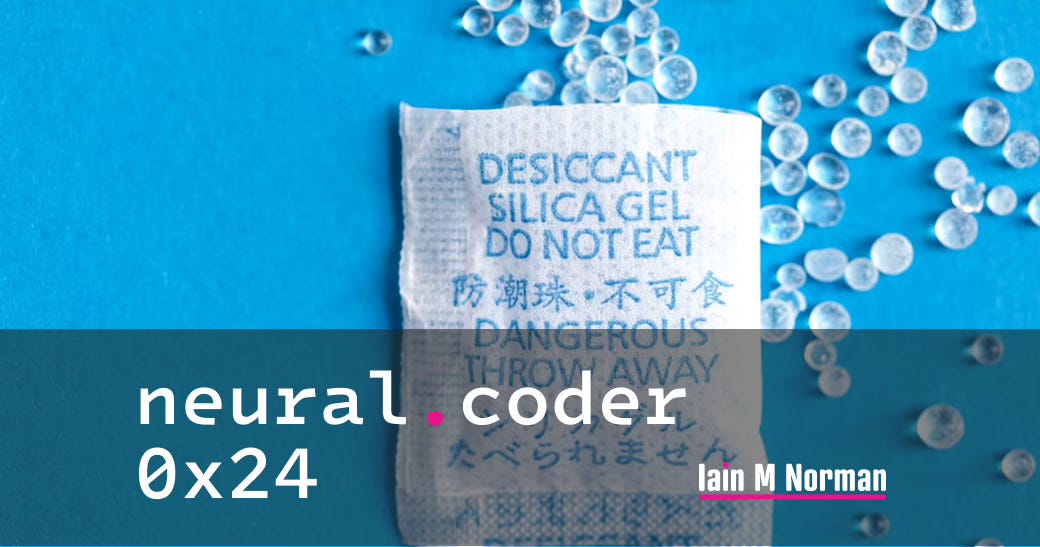
After another two hours, he had a working system and was ready to test. He needed something to practise on. He looked at the weaponry Duncan had been preparing, they’d be going up against a well armed army of Obligato soldiers, was there something he could do to help? What if he could identify bullet cartridges and change the material of the bullet into something harmless. After some quick research online, Geoff decided it was better to transmute the primer into something inert, so they couldn’t even be fired. Whilst staring at the packaging the glasses came in, he decided upon silica gel.
He had written a routine that, when given the coordinates of a box within a nearby space, was then able to identify every cartridge within that space and change the primer to gel. It was time to test it out. Duncan gave him a magazine of rounds, which he placed on the floor of the van.
Geoff powered up the new phone application and the AR glasses hand-tracking interface. He selected a bounding box around the magazine with his right hand, and with his left hand, he chose an action from a radial menu, twisting from the wrist, swiping and tapping to select options only he could see.
“It’s done,” he said.
Duncan picked up the magazine and popped a few rounds out.
“How do we know if it’s worked?”
“Try firing one?” Geoff said.
“I can’t just fire off a round in here!”
“Sorry, I’m a bit excited,” Geoff said.
“I’ll take one apart and have a closer look,” Duncan said.
A few minutes later, with the assistance of some tools he’d found in a desk draw, Duncan had disassembled three of the cartridges Geoff had transmuted. “All three of these primer caps are dead,” he confirmed.
“Excellent,” Geoff said.
Disabling bullets was just one of many things Geoff added to the app over the next hour or so, he was on a roll with ideas, and they just kept pouring out of him and into the code. He’d even decided to put in some teleportation commands, as it could be useful to teleport a door out of the way.
He now had to turn to finding and tailoring a suitable virus.
The hours were ticking away, but Geoff had been busy.
“I’ve been working on the virus,” he said, “I’ve downloaded some latest skeleton code from the dark web. I’ve been working out how we want it to spread. I think if we can get into their mobile device management platform, then I can ship something to all their phones. That will let me leverage any phones with quantum chips to jump air gaps using tweaking, search for magnetic media and solid state memory and wipe them when they can be found nearby.”
“Is that safe?” Pete said from the driver’s seat, “To put your working tweaking code on Obligatto devices?”
“No worries, it will self delete once it’s done. All that will be left is a secure delete programme. That’s presuming they do centrally manage phones?”
“I can’t do anything with my phone, it’s totally locked down. Apparently they can read it all and remotely wipe it clean if I lose it,” Pete said.
“Perfect,” said Geoff, “that’s just what I need. We need a physical starting point, is there a central server room or anything?”
“It’s marked on the map as The Archive,” Pete said.
Geoff and Duncan poured over the maps on the tablet Duncan had been browsing.
“Right here,” Duncan said, “In the basement of the main old stone building.”
“They’ll definitely be people in Archival,” Pete said, “they’ll be working round the clock on trying to replicate your code. There shouldn’t be any trouble subduing them. We’ll stop in a bit for some food, and we can go over a plan for a route in. I’ll show you where we’ll meet resistance and where we won’t.”
After their planning stop, another two or three hours passed before they entered London proper, slipping off the motorway and weaving through the inner streets towards the Obligatto headquarters in North London.